Beyond Intelligent Robots (Part 3): The Hidden Engineering Behind Physical AI
An industry thought leadership series by Infocusp Innovations
Beyond Intelligent Robots is a four-part thought leadership series exploring the technologies, platforms, ecosystems and engineering shaping the next era of intelligent manufacturing. Drawing on emerging industry trends and real-world developments, the series examines how Physical AI is redefining industrial innovation, and what it will take for technology companies to lead in this new era.
Synopsis
The success of Physical AI depends on far more than intelligent algorithms or advanced robotics. Behind every industrial deployment lies a broad engineering foundation spanning simulation, software, systems engineering, functional safety, industrial connectivity and product development. This article examines the engineering disciplines that enable Physical AI to move beyond prototypes and operate reliably at industrial scale.
The rapid progress of Physical AI has shifted attention towards intelligent robots, autonomous systems and AI-powered industrial automation. Advances in perception, reasoning and robotics continue to expand what machines can achieve across manufacturing, logistics and industrial operations.
What receives far less attention is the engineering required to transform these technologies into reliable industrial products.
Moving from a laboratory demonstration to a production-ready solution requires far more than intelligent algorithms. It demands engineering across simulation, software, embedded systems, industrial connectivity, functional safety, validation, cybersecurity and lifecycle management. These disciplines determine whether a promising technology can operate reliably within the complexity of an industrial environment.
Understanding this engineering foundation provides a more complete picture of Physical AI — and explains why successful deployments depend on engineering excellence as much as technological innovation.
Engineering Beyond the Robot
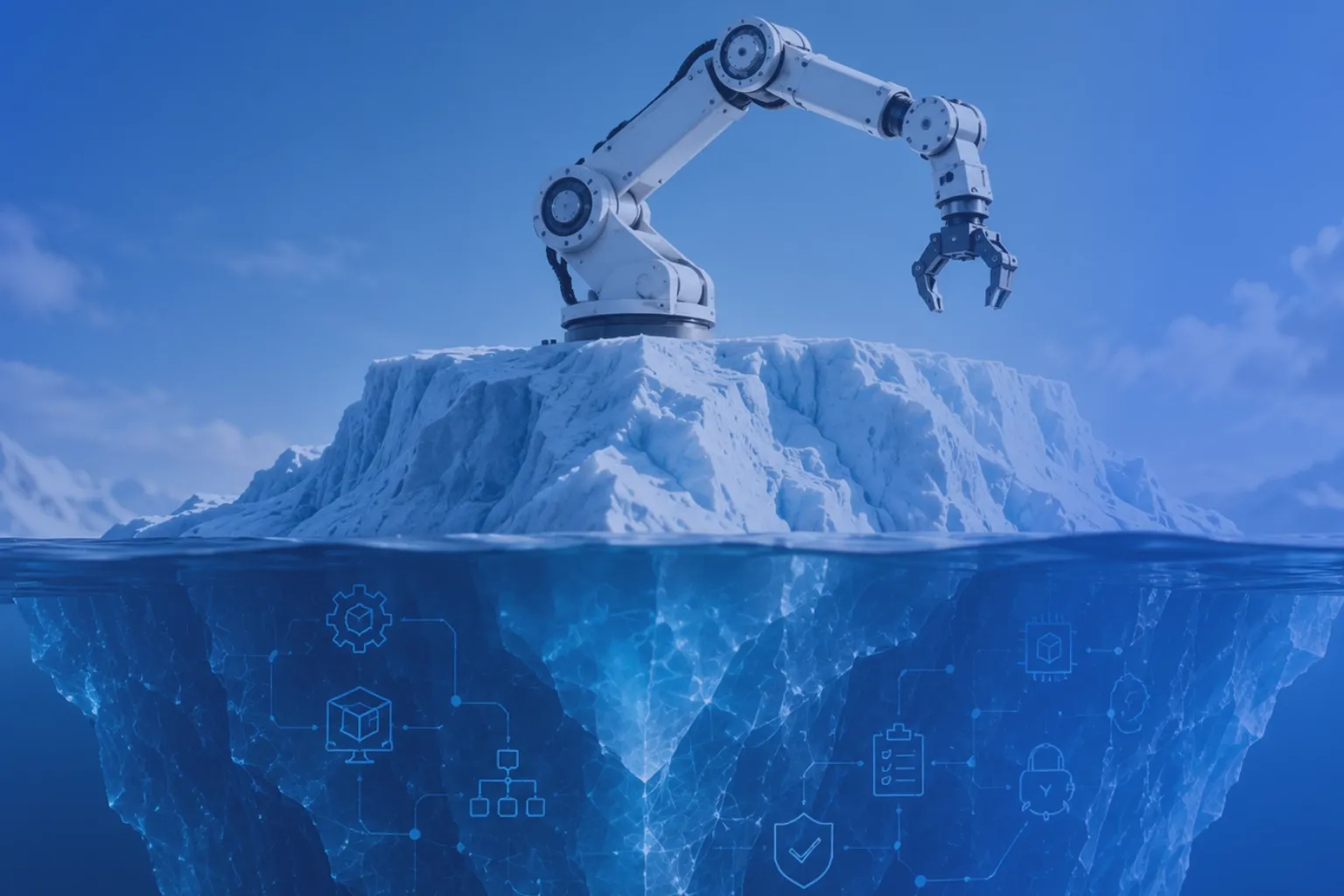
Robots represent the most visible expression of Physical AI, but they are only one part of a much larger engineering effort.
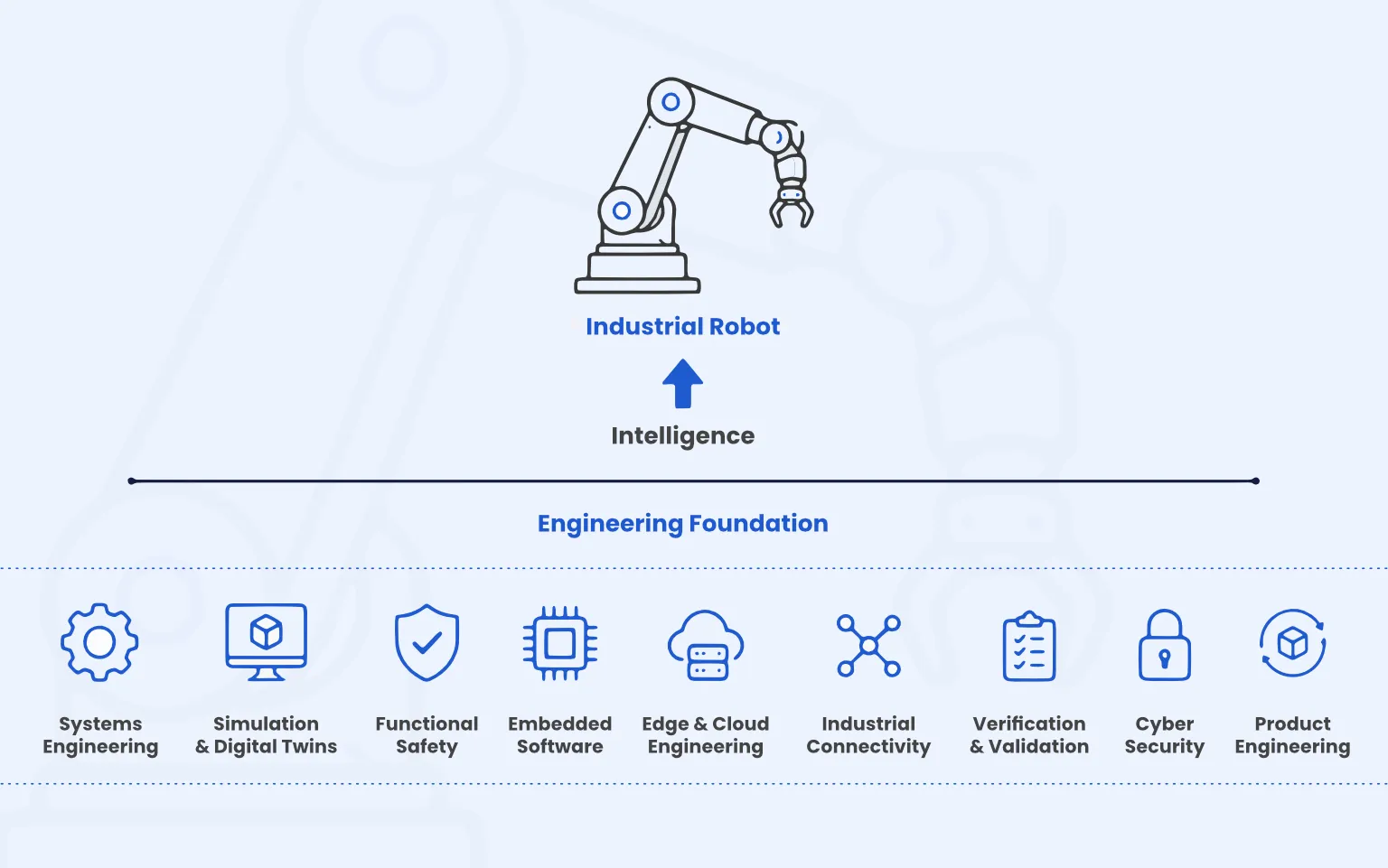
Every industrial deployment begins long before a robot enters a factory. Requirements must be defined, system architectures designed, software developed, hardware validated and operational risks understood. As development progresses, engineering teams work across multiple disciplines to ensure that AI models, robotics platforms and industrial systems function as a reliable whole.
This engineering landscape extends well beyond artificial intelligence. Simulation helps validate behaviour before deployment. Embedded software enables deterministic control. Industrial communication protocols allow equipment to exchange information reliably. Functional safety protects people and assets. Verification and validation ensure predictable performance under real operating conditions. Product engineering transforms prototypes into scalable industrial solutions.
These disciplines rarely receive the same attention as AI breakthroughs or robotic demonstrations, yet they determine whether Physical AI can be deployed successfully at industrial scale.
Engineering Challenge 1: Designing Before Deployment
Unlike software applications, Physical AI systems cannot be developed through continuous trial and error in live production environments.
Manufacturers require confidence that autonomous systems will behave predictably before they interact with equipment, products or people. Simulation environments, digital twins and virtual commissioning allow engineering teams to evaluate system behaviour, optimise performance and identify potential failures before physical deployment begins.
This reduces implementation risk, shortens commissioning cycles and allows organisations to validate increasingly complex systems without disrupting production.
Engineering Challenge 2: Building Reliable Industrial Systems
Physical AI combines multiple engineering domains that must operate together under demanding industrial conditions.
AI models, robotics software, embedded systems, cloud platforms, edge computing and industrial communication networks each contribute different capabilities. Engineering teams must ensure these technologies exchange information reliably, respond within predictable time constraints and maintain operational stability throughout continuous production.
Building these systems requires far more than integrating technologies. It requires engineering architectures that balance performance, reliability, security and maintainability over the entire lifecycle of the solution.
Engineering Challenge 3: Deploying in Real Industrial Environments
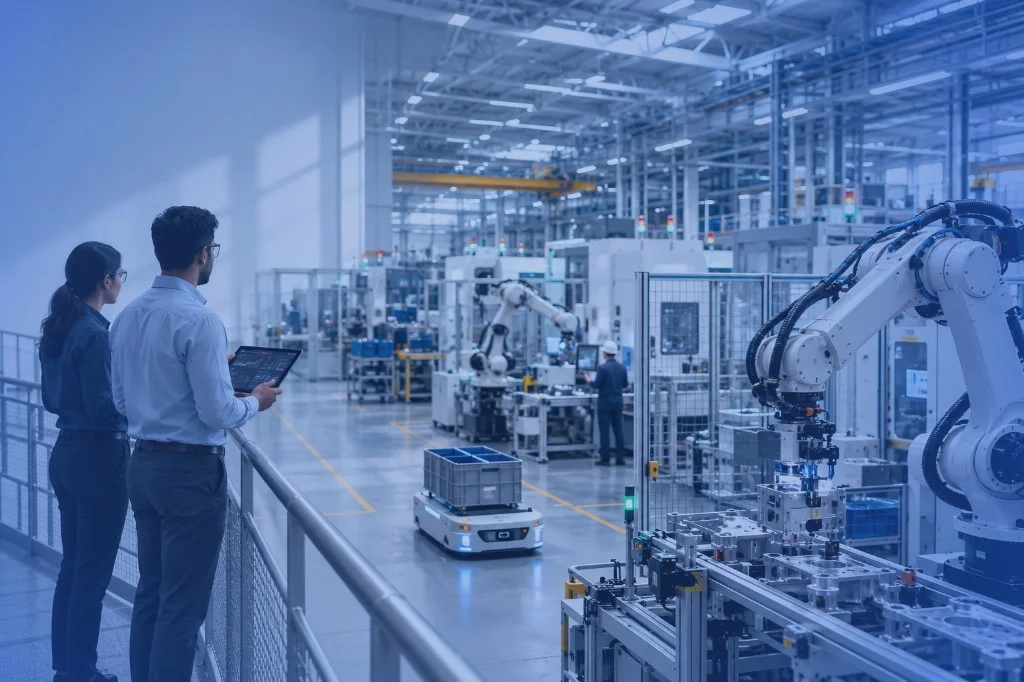
Unlike controlled development environments, factories are characterised by legacy equipment, diverse communication protocols, existing enterprise applications and production processes that have evolved over many years. Physical AI systems must integrate with this operational landscape without disrupting safety, reliability or productivity.
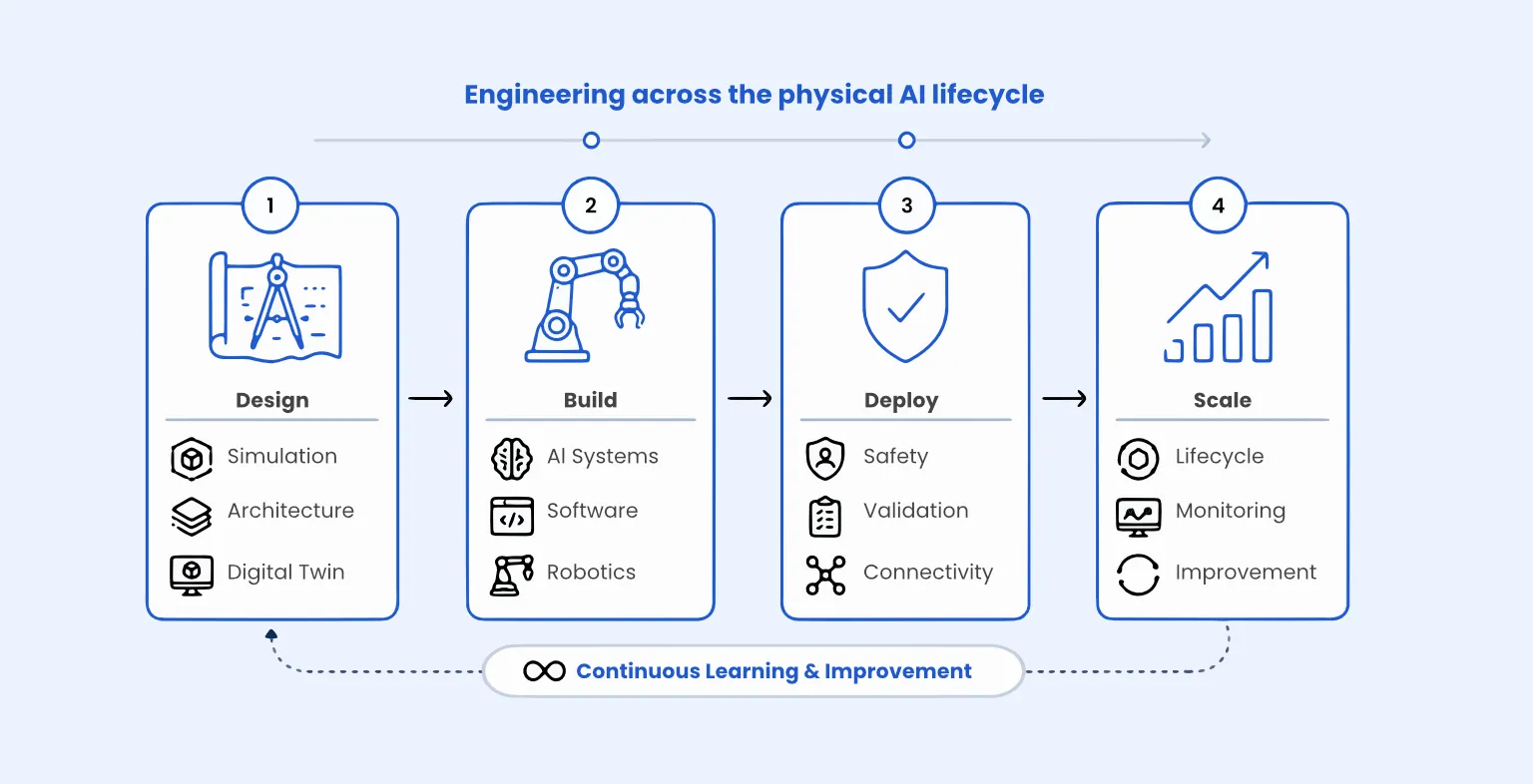
This requires engineering disciplines that are often overlooked in discussions about AI and robotics. Functional safety ensures intelligent systems can operate safely alongside people and equipment. Industrial networking and systems integration enable reliable communication between robots, machines and enterprise software. Verification and validation confirm that systems perform consistently under real operating conditions, while cybersecurity protects increasingly connected industrial environments from evolving threats.
Successful deployment is therefore measured by far more than technical performance. It depends on whether intelligent systems can be introduced into existing operations with confidence, operate reliably over time and deliver measurable value within the realities of an industrial environment.
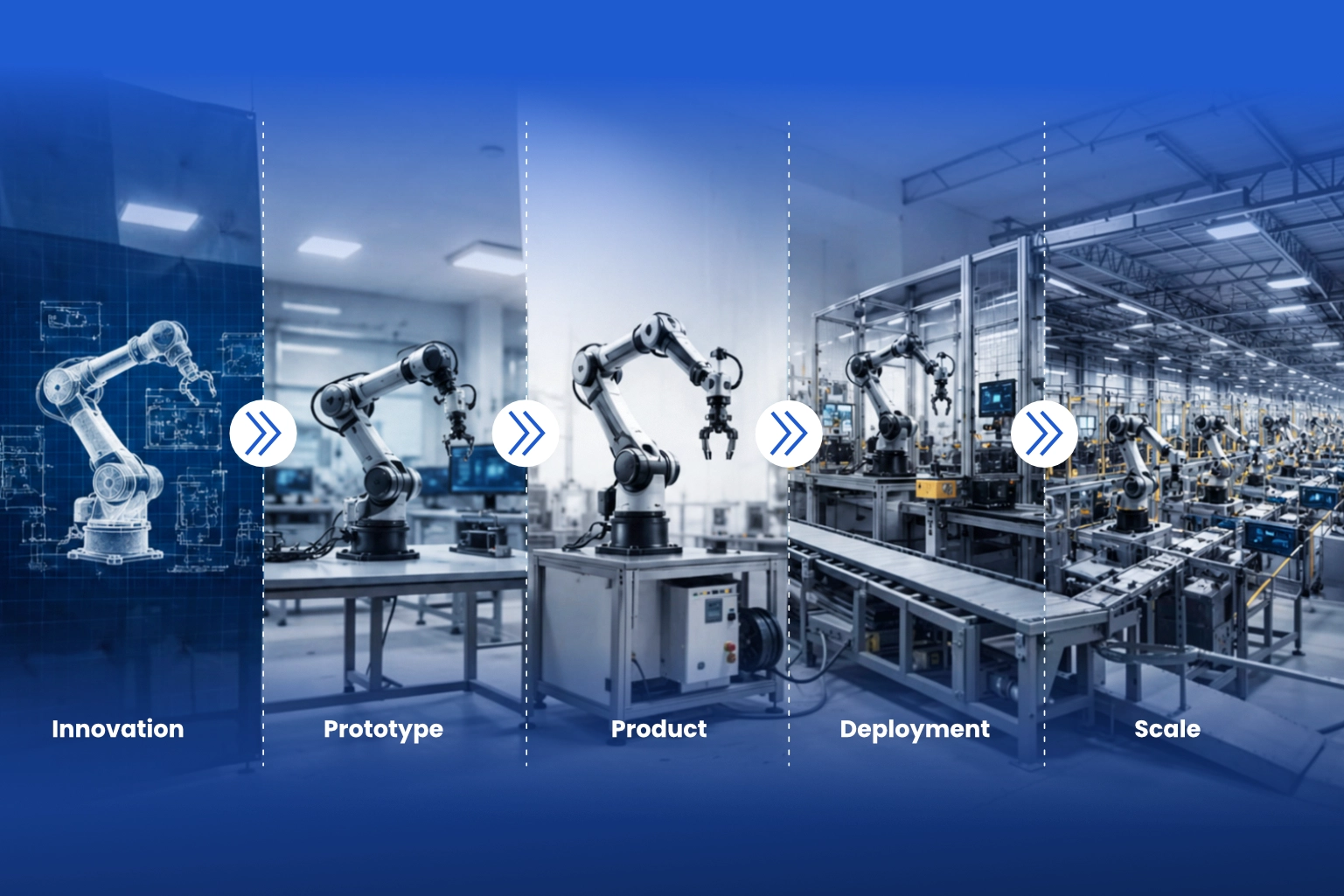
Engineering Challenge 4: Scaling Beyond the Prototype
Building a successful prototype demonstrates technical feasibility. Scaling that solution across multiple customers, facilities or production environments presents a very different engineering challenge.
Industrial deployments require software version control, configuration management, cybersecurity, remote diagnostics, lifecycle support, validation processes and continuous product improvement. Each deployment introduces variations in equipment, production workflows and operational requirements that must be accommodated without compromising reliability.
Product engineering therefore becomes essential to transforming innovation into repeatable industrial capability.
Looking ahead
As Physical AI continues to mature, engineering will play an increasingly important role in determining how quickly intelligent technologies can move from promising demonstrations to dependable industrial systems.
Understanding these engineering challenges also raises an important strategic question.
If successful Physical AI depends on such a broad range of specialised engineering capabilities, how can technology companies build, access and scale that expertise while continuing to innovate?
That is the focus of Part 4 of Beyond Intelligent Robots: Scaling Physical AI — The Strategic Role of Engineering Partnerships, the final article in the series, where we examine how engineering partnerships are helping technology companies scale innovation while remaining focused on their core strengths.