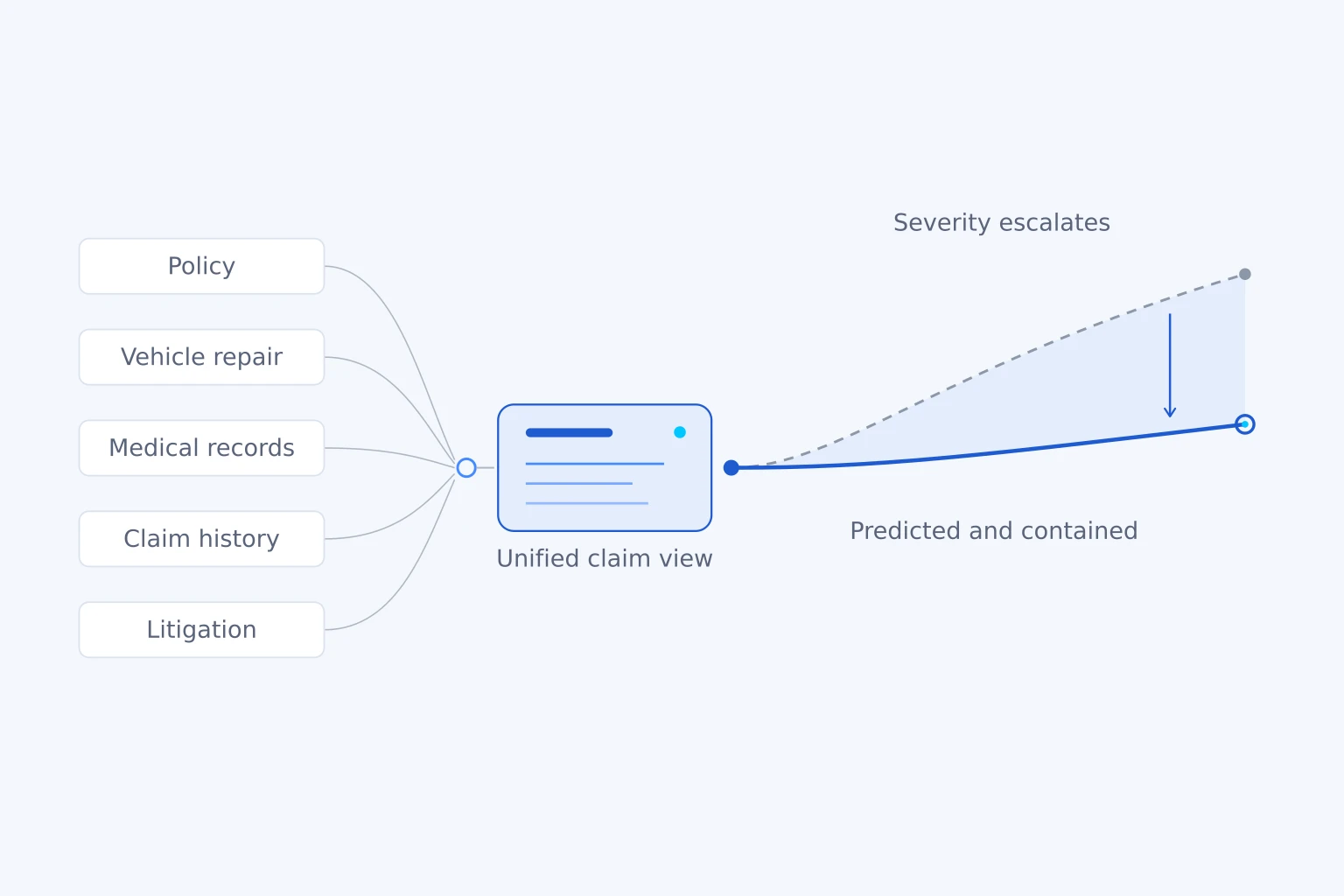
Healthcare Interoperability in 2027: Can APIs Finally Modernize Prior Authorization

Synopsis
In the United States, healthcare interoperability is moving from a long-standing technology goal to an operational requirement. The Centers for Medicare & Medicaid Services (CMS) has established new requirements for health plans to exchange information electronically, with major prior authorization application programming interface (API) requirements taking effect primarily in January 2027. But connecting the APIs is only part of the challenge. The systems, data, and workflows behind them will determine whether interoperability actually works in practice.
Twenty-four minutes
Despite years of digitization, prior authorization remains one of healthcare’s most time-consuming administrative processes. According to the 2024 CAQH Index, provider staff spends an average of 24 minutes securing an authorization by phone, fax, or email. Even through a health plan portal, the process takes 16 minutes, the highest portal time among the administrative transactions measured.
At scale, those minutes become an operational burden for health plans and providers alike. They also show why healthcare interoperability is about more than moving information between systems. It is about reducing the manual work required to make that information useful.
CMS is now pushing that change forward. For US health plans, new requirements are already changing how prior authorization is handled, with broader API requirements taking effect primarily in January 2027.
The deadline is clear. The harder question is what needs to happen behind the API to make the new model work.
The pressure has already arrived
One detail is frequently missed in discussions of the 2027 date: the requirements arrived in two waves, and the first has been in force for some time.
Since January 2026, impacted payers have generally been required to respond to expedited prior authorization requests within 72 hours and standard requests within seven calendar days. They must also provide a specific reason when a request is denied. Beginning in 2026, impacted payers must also publicly report certain prior authorization metrics. (Source)
These requirements apply to the prior authorization process regardless of whether the request arrives through a digital channel or a more traditional one.
For many organizations, then, the relevant question is not only whether they will be ready for a future requirement.
It is whether the requirements already in force are being supported consistently across the organization.
What changes in January 2027
Beginning primarily on January 1, 2027, impacted payers must meet new API requirements under CMS-0057-F. The exact compliance dates vary by payer type, but the central change is the same: information that has traditionally required manual exchange will increasingly need to move through connected digital systems.
The requirements cover several parts of that exchange.
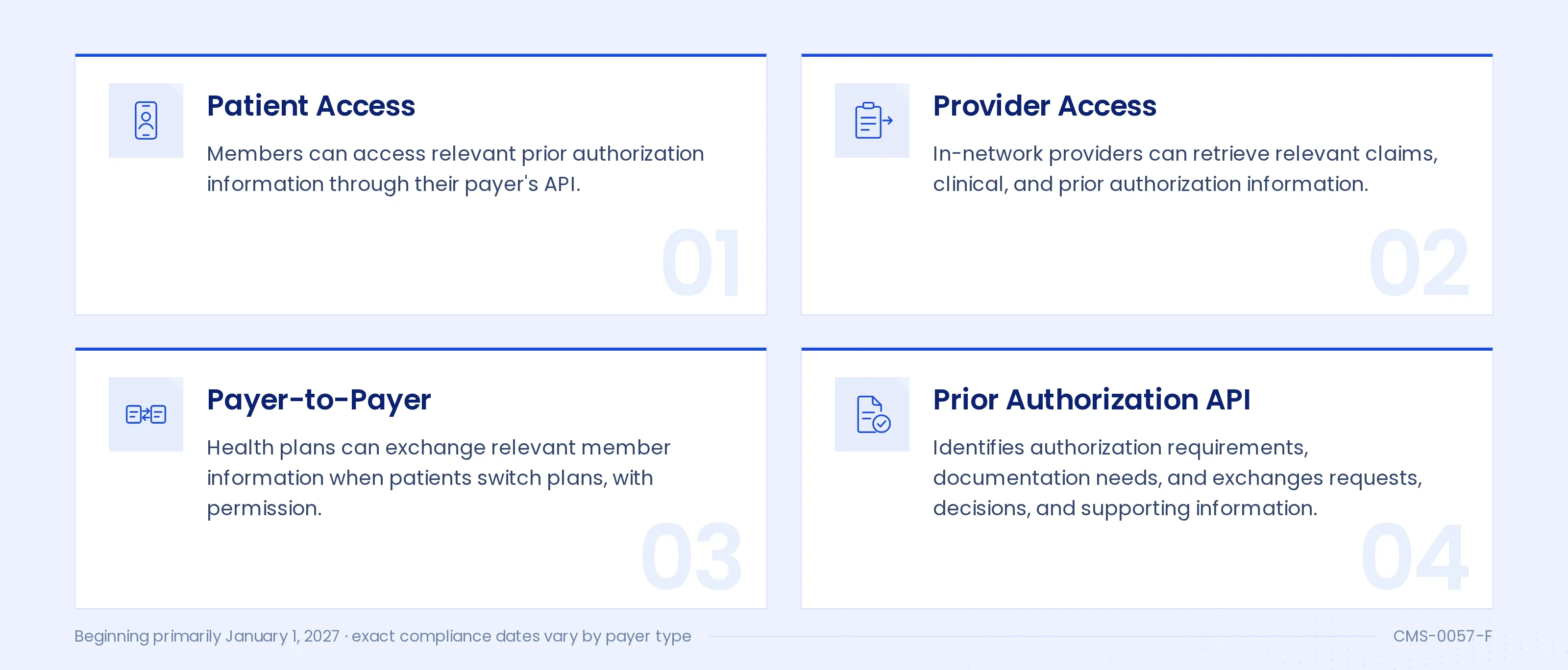
The intent is straightforward: let the right information reach the right organization without another phone call.
Delivering it is where the difficulty concentrates.
The interoperability question underneath the deadline
A digital connection is, in engineering terms, not an especially difficult thing to build. Making it useful is a different problem entirely.
When a doctor’s system asks a health plan whether a treatment requires authorization or what documentation is needed, something has to answer accurately and about the correct patient.
That answer has to come from somewhere.
In most health plans, it comes from several places.
Claims platforms, member systems, provider directories, authorization workflows, clinical repositories, document stores, data warehouses, and applications that have been running reliably for years may all hold pieces of the information required to answer a single request.
Each may describe the same member differently. Each may store the same fact in a different structure, behind a different interface, under different business rules.
A new connection provides a cleaner way to reach those systems. It does not, on its own, resolve the differences between them.
This reframes the project usefully.
The question is not whether a health plan can build the interface.
It is whether the organization can make the systems behind that interface work together reliably.
Why the systems behind the interface decide the outcome
Four areas will determine whether an implementation holds.
Connecting what already exists. Modernizing prior authorization rarely means replacing the platforms that run claims, member services, or clinical review. The practical path is often to connect them through a more coherent layer. That begins with an honest map of where information lives, how it moves today, and where the process breaks down — work that is invisible in a demonstration and decisive in production.
Making information usable, not merely available. Records may need to be matched, translated, and validated before they can support a digital workflow. Data quality matters because a faster process built on inconsistent information does not produce faster answers. It produces faster uncertainty.
Designing for reliability and security. These connections carry sensitive information and operate inside a live healthcare process. Access controls, auditability, monitoring, and predictable behavior under real demand need to be considered from the beginning. A system that performs well in a controlled test but degrades under production volume has not solved the problem it was built for.
Testing the journey, not the component. A request can travel from a provider’s system, through an API, into a plan’s integration layer, out to source systems, through review, and back again. Every handoff is a place where the process can fail. Confirming that each component functions is not the same as confirming that the journey completes.
None of this is unusually advanced engineering, but it is unusually interconnected engineering — and interconnected work is difficult to compress into the final months before a deadline.
Compliance is the deadline. Modernization is the opportunity.
The 2027 requirements can be treated as a compliance project: build the interfaces, meet the specifications, and move on.
Or they can become the occasion to improve something that has needed attention for years.
The second path does not necessarily mean replacing core systems or launching a multi-year transformation. It means making a mandatory investment to improve how existing systems exchange information, because that capability remains useful even after the deadline passes.
CMS estimates that its interoperability and prior authorization policies could save approximately $15 billion over ten years through reduced administrative burden. That value, however, depends on implementation.
And the requirements are not standing still.
In April 2026, CMS proposed extending electronic prior authorization requirements to drugs covered under a medical benefit, with proposed requirements beginning October 1, 2027. The proposal builds on the interoperability foundation established by CMS-0057-F.
The direction matters.
A superficial layer designed solely to meet the January 2027 deadline may have limited durability. A more robust foundation ensures support for future requirements.
What health plans need to get right
For health plans still shaping their approach, the useful questions are less about technology selection than about the environment the technology has to operate in.
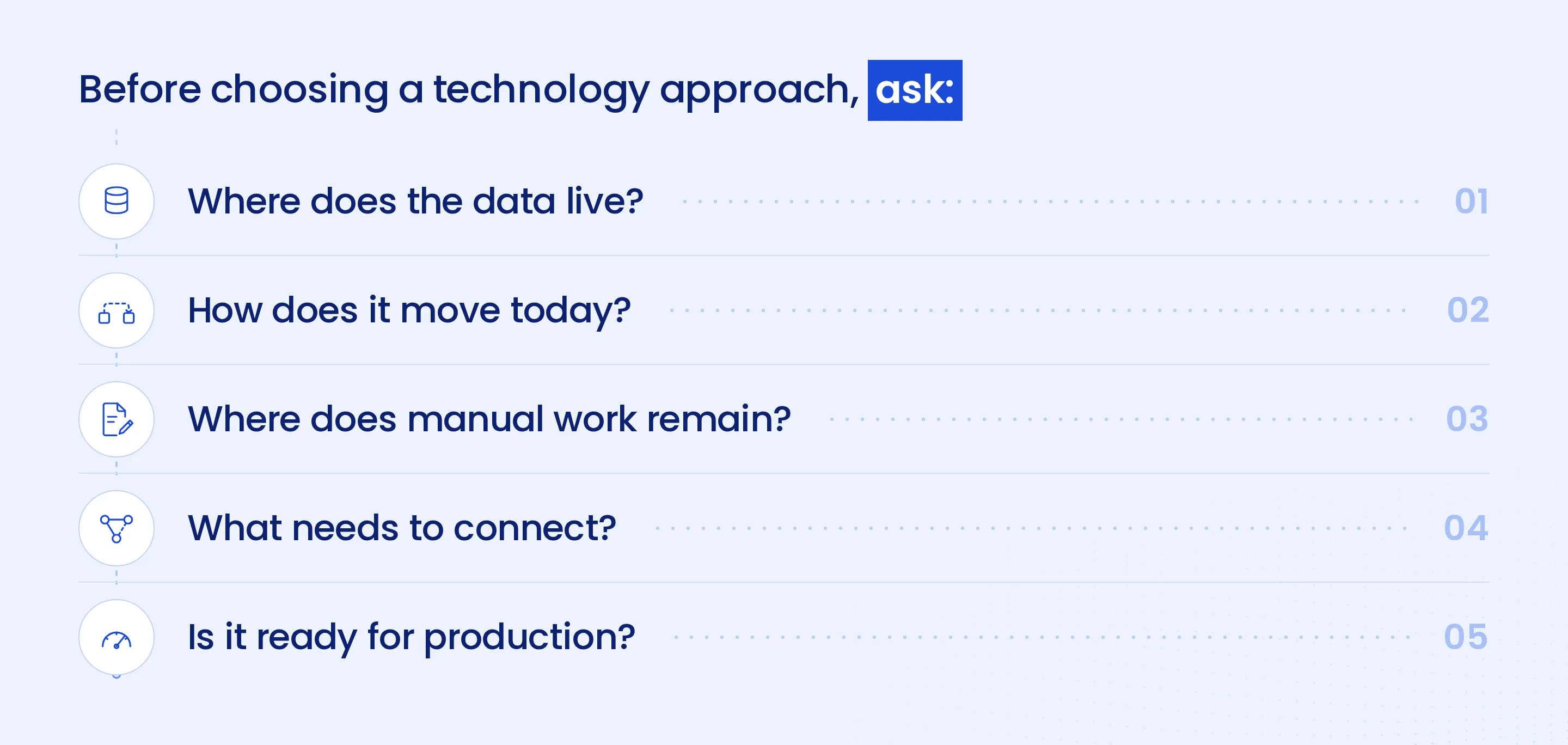
Those questions tend to clarify another decision: what to build internally, what existing platforms can accelerate, and where specialist engineering capability can shorten the path.
There is no universal answer.
The right model depends on the systems already in place, the organization’s broader modernization priorities, and the capabilities it wants to retain in-house.
What is consistent is this: buying a platform does not resolve fragmented source data. Building an interface does not modernize the systems behind it. Meeting a specification does not confirm that the end-to-end process is ready.
The technology decision is one part of the implementation strategy. It is rarely the part that determines the outcome.
Engineering the systems behind better healthcare experiences
That distinction is a familiar one to us.
At Infocusp, most of our work sits below the interface. We build the data pipelines, integrations, and cloud infrastructure that let information move reliably between systems that were never designed to share it — often in regulated environments, where accuracy, traceability, and predictable behavior under real demand are requirements rather than refinements.
See how we've solved complex challenges
For health plans working toward the 2027 requirements, that tends to mean the parts of the program that are hardest to see: reconciling records across source systems, confirming that data holds up once it leaves a controlled environment, and testing the full journey rather than its individual components.
The interface is one part of the system. The substantive work is making the technology, data, and workflows behind it function as one, and that is what determines whether a regulatory requirement becomes a better operational process or simply a compliant one.
What comes next
The healthcare industry has discussed interoperability for years. The current requirements make that discussion concrete, with a date attached.
Prior authorization is becoming a useful test of whether healthcare organizations can move from isolated digital transactions toward workflows where information travels more naturally between systems.
That shift will not be delivered by an interface alone. It depends on the less visible work of connecting applications, improving data quality, strengthening infrastructure, and validating how the complete process behaves under real conditions.
For health plans, that work has an immediate regulatory reason and a considerably longer commercial one.
January 2027 marks the start of the new API requirements, not the end of the work. Health plans will continue exchanging information with providers, meeting decision timeframes, reporting on performance, and adapting as the requirements evolve. The more useful question, then, is not simply whether the deadline can be met, but whether the systems put in place will continue to support what comes next.
The API may define how information moves. Engineering determines how well it does.
If your organization is working through its interoperability roadmap and would value a conversation about the engineering underneath it, our healthcare team would be glad to talk.